Does HRT Help With Fatigue?
HRT can help with fatigue, but mostly in an indirect way.
When estrogen and progesterone drop, night sweats and poor sleep often follow, and that broken sleep drains your energy.
Hormone therapy is the most effective treatment for night sweats and can improve sleep quality, which often brings energy back within about three months.
It works best when other causes, like thyroid problems or low iron, have been ruled out first.
You’re tired in a way that sleep doesn’t fix.
You wake up worn out, drag through the afternoon, and wonder where your old energy went.
If you’re in your 40s or 50s, you’ve probably asked yourself: does HRT help with fatigue, or is that just wishful thinking?
The honest answer is that it often does, but not for the reason most people expect.
Below, we’ll walk through what the research shows, how long it takes to feel a difference, and what else should be checked before you blame your hormones.
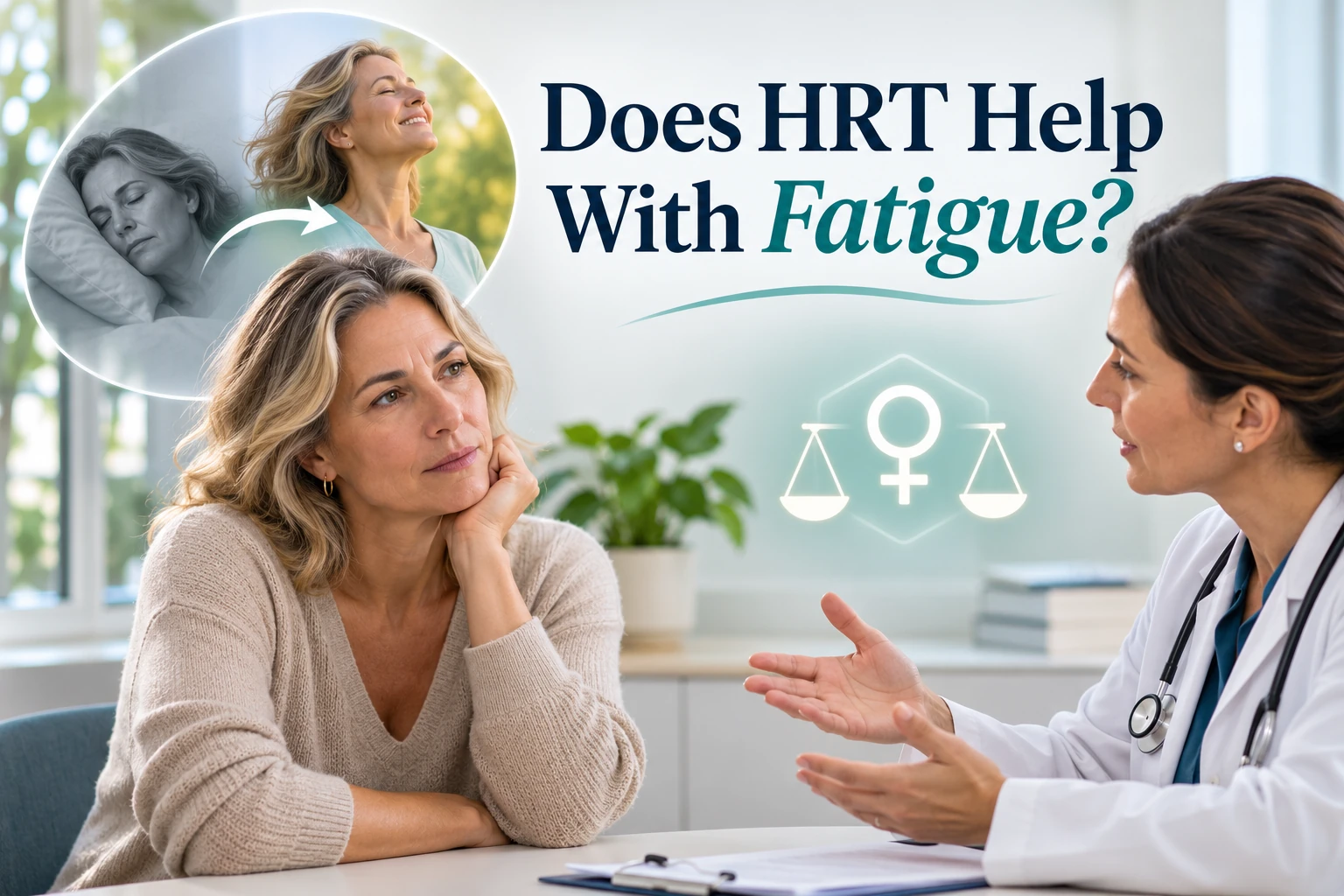
Does HRT Help With Fatigue?
Yes, HRT can help with fatigue for many people, especially when tiredness comes from night sweats and poor sleep.
Hormone therapy doesn’t act like caffeine.
Instead, it treats the hormone-driven problems that wreck your rest, so your energy can recover on its own over several weeks to a few months.
Fatigue is one of the most common complaints during the menopause transition.
In a 2026 study of more than 12,000 women, those in perimenopause most often reported exhaustion (95%) and fatigue (93%).
That sample came from a health app, so the real-world numbers may be lower, but the pattern is clear.
Most of the research on HRT and energy looks at sleep, not fatigue directly. That matters.
It means HRT is most likely to help if your tiredness is tied to hot flashes, night sweats, or waking up at 3 a.m.
It’s less likely to help if something else is going on, like a thyroid problem or low iron.
In our experience, patients who wake up drenched or restless at night tend to notice the biggest change in their daytime energy once their hormones are balanced.
Why Do Hormone Changes Make You So Tired?
Hormone changes make you tired mainly by breaking up your sleep.
Falling estrogen triggers hot flashes and night sweats that wake you up, while lower progesterone can make it harder to fall and stay asleep.
Over weeks and months, that lost sleep adds up to deep, lasting fatigue.
Night Sweats and Broken Sleep
Estrogen helps your brain control body temperature.
When it drops, your internal thermostat gets touchy.
Small changes can set off a hot flash, and at night those flashes turn into night sweats that pull you out of deep sleep.
These symptoms don’t always pass quickly.
In a large long-term study, frequent hot flashes and night sweats lasted a median of 7.4 years. That’s a long time to go without solid rest.
Night sweats may also point to a bigger sleep problem.
Middle-aged women with severe hot flashes and night sweats were found to have a higher risk of obstructive sleep apnea, a condition where breathing stops and starts during sleep.
Mood, Brain Fog, and the Fatigue Cycle
Poor sleep doesn’t just make you tired.
It also makes it harder to focus, manage stress, and stay positive.
Many women notice that fatigue shows up alongside brain fog during menopause, and each one makes the other feel worse.
When you’re exhausted, you move less.
When you move less, your energy drops further.
Breaking that cycle often starts with getting better sleep.
How Each Hormone Affects Your Energy
Estrogen, progesterone, and testosterone each play a different role.
Knowing which one is low helps your provider choose the right treatment instead of guessing.
Estrogen
Estrogen is the main hormone behind hot flashes and night sweats.
Hormone therapy is still considered the most effective treatment for these symptoms, which is why it so often helps with sleep and, in turn, energy.
In the KEEPS trial, recently menopausal women who took either oral estrogen or an estrogen patch slept better than women on a placebo.
A 2022 review of 15 randomized trials found hormone therapy improved sleep quality in most of them, with the clearest benefit in women who also had hot flashes.
Estrogen comes in several forms, including pills, patches, creams, and pellets.
Each has its own pros and cons, and the difference between a patch and a cream can affect how steady your levels feel day to day.
Progesterone
Progesterone has a calming effect on the brain.
Many women notice their sleep gets worse in perimenopause, when progesterone often drops before estrogen does.
In a Canadian trial of 189 women aged 35 to 58, taking oral progesterone at bedtime improved how well women felt they slept compared with a placebo.
It also eased night sweats and did not raise rates of depression.
Testosterone (in Women, Too)
Women make testosterone too, and levels slowly fall with age.
Some women on HRT ask whether adding it will boost their energy.
The evidence here is limited.
An international expert consensus found that the main proven use of testosterone in women is treating low sexual desire after menopause.
It isn’t a proven fatigue treatment on its own, so it should only be added after testing and a careful conversation with your provider.
How Long Does It Take for HRT to Help With Fatigue?
Most people notice better sleep and fewer night sweats within the first few weeks of starting HRT.
Daytime energy usually takes longer to catch up, often around two to three months.
That’s because your body needs time to recover from months or years of poor rest.
The First Few Weeks
Hot flashes and night sweats are usually the first symptoms to ease.
The timing depends on the form you use, and an estradiol patch can start working faster than many people expect.
Don’t judge your results in week one.
Early on, your body is still adjusting to the new dose.
Around the Three-Month Mark
By about three months, most people have a good sense of whether HRT is helping their energy.
In our experience, this is the right time for a follow-up visit and repeat labs to fine-tune your dose or switch to a different form if needed.
If you use pellets, energy can also dip near the end of each cycle.
Knowing the signs that hormone pellets are wearing off can help you and your provider time your next dose.
Can HRT Make You Tired?
Yes, HRT can sometimes make you feel tired, especially in the first few weeks.
Oral progesterone is the most common cause because it can make you drowsy.
That’s why it’s usually taken at bedtime.
Tiredness that lasts past the first month or two is worth reviewing with your provider.
The sleepy effect of progesterone is often a good thing at night.
Trials like the one above use bedtime dosing for exactly this reason.
If you take it in the morning by mistake, you may feel groggy all day.
A dose that’s too high or too low can also leave you feeling off.
Small changes, like switching from pills to a patch or adjusting the timing of your dose, often help.
In our experience, very few patients need to stop HRT because of tiredness alone.
When Your Fatigue Isn’t About Hormones
HRT won’t fix fatigue that comes from another health problem.
Many conditions that cause tiredness also show up in midlife, and their symptoms can look a lot like menopause.
A midlife patient with fatigue and low mood could have menopause, a thyroid problem, sleep apnea, or low iron, and sometimes more than one at once.
Thyroid Problems
An underactive thyroid slows your whole body down.
It can cause fatigue, weight gain, dry skin, feeling cold, and brain fog.
Since these overlap with menopause, a simple blood test is the best way to tell them apart.
Low Iron, B12, or Vitamin D
Heavy periods during perimenopause can drain your iron stores, sometimes before a standard blood count looks abnormal.
Low vitamin B12 and vitamin D can also leave you tired and achy.
These gaps are easy to miss without testing.
Micronutrient testing looks at dozens of vitamins and minerals at once, so you can see what your body may be missing.
Sleep Apnea
Sleep apnea becomes more common after menopause.
A population-based study found that postmenopausal women had a substantially higher risk of sleep apnea than women who hadn’t reached menopause.
If you snore, wake up gasping, or still feel exhausted after a full night in bed, ask about a sleep study.
Depression, Stress, and Medications
Depression often shows up as low energy rather than sadness.
Ongoing stress and some common medications, such as certain blood pressure drugs and antihistamines, can also cause fatigue.
Labs Worth Asking About
Before starting HRT for fatigue, it’s smart to ask for a full picture.
A good starting panel often includes:
- Hormones: estradiol, progesterone, FSH, and testosterone
- Thyroid: TSH and free T4
- Blood count and iron: CBC and ferritin
- Vitamins: B12 and vitamin D
- Metabolic health: blood sugar and A1c
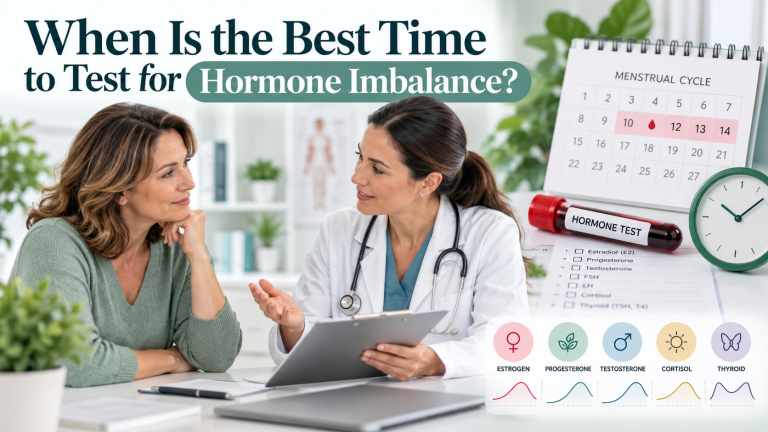
Timing matters too, especially if you still have periods.
Knowing the best time to test for hormone imbalance helps make your results more accurate.
You can also learn more about how to check hormone levels before your visit.
Does Testosterone Therapy Help Men With Fatigue?
Testosterone therapy may help some men with fatigue, but only when blood tests confirm truly low testosterone along with other symptoms.
Low energy on its own is a weak sign of low testosterone.
Sleep apnea, weight, stress, and depression are common causes that should be checked as well.
Men’s testosterone drops slowly with age, and low levels can bring fatigue, low sex drive, weight gain, and loss of muscle.
Endocrine Society guidelines list decreased energy as one of the less specific symptoms, which means it can have many causes.
The research on energy is mixed.
The American College of Physicians found no clear benefit of testosterone for low energy in older men, though it did help with sexual function.
That doesn’t mean testosterone can’t help.
It means testing comes first.
When labs confirm low levels, testosterone replacement therapy can be part of a broader plan.
For men who want to protect fertility, enclomiphene treatment is another option that helps the body make more of its own testosterone.
Is HRT for Fatigue Right for You?
HRT may be a good fit if your fatigue started around perimenopause or menopause and comes with night sweats, hot flashes, or poor sleep.
For most healthy women under 60, or within 10 years of their last period, experts say the benefits generally outweigh the risks.
A provider should review your health history first.
The Menopause Society’s position statement says the benefit-to-risk balance is most favorable for women under 60 or within 10 years of menopause.
It becomes less favorable for women who start later.
That said, there are real benefits of HRT after 65 for some women, and the decision should be personal.
Safety rules are also changing. In November 2025, the FDA announced it would remove most boxed warnings from menopausal hormone therapy, including those about heart disease, breast cancer, and dementia.
A warning about endometrial cancer remains for estrogen-only therapy in women who still have a uterus.
HRT isn’t right for everyone.
People with a history of certain cancers, blood clots, stroke, or liver disease may need other options.
If you’re unsure, reviewing the signs that you need hormone replacement therapy is a good place to start.
Women who’ve had surgery should also know how HRT after a hysterectomy works differently.
How Nulevel Wellness Medspa Helps You Get Your Energy Back
At Nulevel Wellness Medspa, we start by finding out why you’re tired.
We don’t assume it’s your hormones. Your first visit includes a full health history and lab testing, so we can look at your hormones, thyroid, iron, and nutrient levels together.
If hormones are part of the picture, our hormone replacement therapy for women uses estrogen and progesterone tailored to your levels and symptoms.
We also offer bioidentical hormone therapy and hormone pellet therapy for patients who prefer a longer-lasting option.
For men, our hormone replacement therapy for men starts with confirming low testosterone before any treatment begins.
If your labs show a nutrient gap, vitamin injections such as B12, or IV therapy, can support your recovery while other treatments take effect.
You can see us in person at our offices in Gilbert, AZ and Show Low, AZ, or by telehealth from anywhere in Arizona.
Final Thoughts
So, does HRT help with fatigue? For many people, yes.
It works best when your tiredness is tied to night sweats, hot flashes, and broken sleep.
Most people notice better sleep within weeks and steadier energy by about three months.
The key is making sure hormones are really the cause.
Thyroid problems, low iron, and sleep apnea can all look like menopause fatigue, and they need different treatment.
Individual results vary, which is why testing and follow-up matter so much.
If you’re tired of being tired, Nulevel Wellness Medspa can help you find the real cause and build a plan that fits your body.
Book a consultation at our Gilbert or Show Low office, or start with a telehealth visit from anywhere in Arizona.
Frequently Asked Questions
Can HRT give you more energy?
HRT can improve energy for many people, but usually indirectly. It reduces night sweats and hot flashes and can improve sleep quality, which helps your energy recover over time. It doesn’t work like a stimulant, and it’s less likely to help if your fatigue comes from another cause, such as a thyroid problem or low iron.
Why am I more tired after starting HRT?
Some people feel more tired in the first few weeks of HRT. Oral progesterone is the most common reason, since it can cause drowsiness and is meant to be taken at bedtime. A dose that’s too high or too low can also cause tiredness. If it lasts more than a month or two, talk with your provider about adjusting your dose, timing, or form.
What type of HRT is best for fatigue?
There’s no single best type of HRT for fatigue. Estrogen helps most when fatigue comes from night sweats and hot flashes, while bedtime progesterone may help with sleep. Patches, creams, pills, and pellets all work, and the right choice depends on your symptoms, labs, health history, and preferences.
Can low testosterone cause fatigue in women?
Low testosterone may play a small role in low energy for some women, but the evidence is limited. Expert groups say the main proven use of testosterone in women is treating low sexual desire after menopause. It should only be considered after testing and a discussion with a provider.
Should I get blood work before starting HRT for fatigue?
Yes. Blood work helps confirm whether hormones are the cause and rules out other common problems. A helpful panel often includes hormone levels, thyroid tests, a blood count, ferritin, vitamin B12, vitamin D, and blood sugar. Testing also gives your provider a baseline to track your progress.
Does menopause fatigue ever go away?
For many women, menopause fatigue eases after the transition, but it can take years. Hot flashes and night sweats lasted a median of 7.4 years in one large study. Treating the cause, whether that’s hormones, sleep, or a nutrient gap, can help you feel better much sooner.
Can I start HRT through telehealth in Arizona?
Yes. Nulevel Wellness Medspa offers HRT consultations by telehealth for patients who are physically in Arizona at the time of each visit. Lab work can be arranged near you, and in-person visits are available at our Gilbert and Show Low offices.