HRT After Hysterectomy
Whether you need HRT after a hysterectomy depends mostly on your ovaries.
If they were removed before menopause, your estrogen drops almost overnight, and hormone therapy is often recommended until at least the average age of menopause to ease symptoms and protect your bones, heart, and brain.
If your ovaries were kept, you may not need HRT right away, but menopause can arrive sooner.
Without a uterus, most women need estrogen alone.
A hysterectomy fixes one problem, but it can leave you with a lot of new questions.
Will you have hot flashes? Will you go into menopause? Is HRT after hysterectomy safe, and do you even need it? The answers depend on what was removed during your surgery, how old you are, and your health history.
This guide walks you through each situation in plain language, using the latest research.
At Nulevel Wellness Medspa, we help women in Gilbert, Show Low, and across Arizona sort through these exact questions every week, so we’ll also share what we’ve learned along the way.
Do You Need HRT After a Hysterectomy?
You likely need HRT after a hysterectomy if both ovaries were removed before natural menopause, because your body suddenly loses most of its estrogen.
If your ovaries were kept, they usually keep making hormones, so you may not need HRT until menopause symptoms appear.
Your age, symptoms, and health history shape the final answer.
A hysterectomy removes the uterus. Your ovaries are what make estrogen, so the key question is whether they were removed too. Surgeons call ovary removal an oophorectomy (oh-off-uh-RECK-tuh-mee).
It’s more common than many people realize: an estimated 600,000 U.S. women have both ovaries removed each year, many before menopause.
If Your Ovaries Were Removed
Removing both ovaries before menopause causes what’s called surgical menopause.
Estrogen levels fall within days, not years.
For most women under about 50 with no reason to avoid hormones, estrogen therapy is a common and well-supported choice.
If you were already past menopause when your ovaries were removed, the change is much smaller.
Your ovaries had already slowed down, so HRT is based on your symptoms rather than on protecting your long-term health.
If Your Ovaries Were Kept
Keeping your ovaries usually means your hormones keep flowing after surgery.
But there’s a catch.
A Duke University study found that women who had a hysterectomy were nearly twice as likely to have early ovarian failure, even when both ovaries were saved.
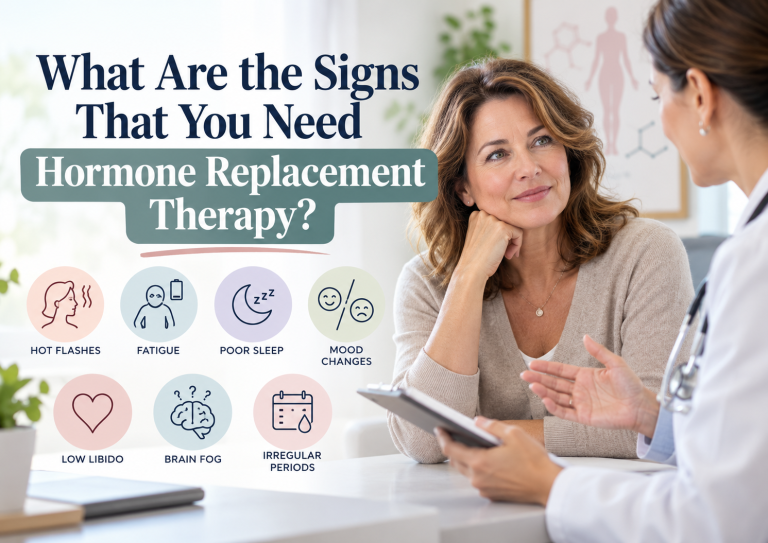
Without periods, you lose your most obvious clue that menopause is starting. So pay attention to hot flashes, night sweats, poor sleep, mood swings, or brain fog.
These are common signs you may need HRT, and a blood test can help confirm what’s going on.
If You Have a History of Endometriosis
Endometriosis is the main exception to the usual rules. Even after a total hysterectomy, stray endometrial tissue can react to estrogen.
Some guidelines suggest adding a progestogen for women with endometriosis until the natural age of menopause.
If this applies to you, make sure your prescriber knows your full surgical history.
What Is Surgical Menopause?
Surgical menopause happens when both ovaries are removed before natural menopause.
Instead of hormones tapering off over several years, estrogen and progesterone drop within days.
Because the change is so sudden, symptoms like hot flashes, night sweats, and sleep problems often start quickly and can feel stronger than in natural menopause.
In our experience, many women are surprised by how fast symptoms show up.
Some notice hot flashes while still in the hospital.
Others feel moody, foggy, or exhausted in the first few weeks and assume it’s just surgery recovery. Knowing what’s normal helps you speak up sooner.
Why Estrogen Matters When Menopause Comes Early
Estrogen does far more than control your cycle.
It helps protect your bones, blood vessels, brain, skin, and joints.
When it disappears years early, those protections go with it.
The Menopause Society’s 2022 position statement notes that women with early menopause face higher risks of bone loss, heart disease, and mood or memory problems.
It supports hormone therapy until at least the average age of menopause (around 51) for these women, unless there’s a medical reason not to.
Bone Health
Your bones lose density fastest in the first years after estrogen drops.
Estrogen therapy slows that loss.
In the large Women’s Health Initiative trial of women who’d had a hysterectomy, estrogen alone led to 6 fewer hip fractures per 10,000 women each year compared with a placebo.
Heart and Brain Health
Research from the Mayo Clinic found that women who had both ovaries removed before menopause had a higher risk of memory problems and dementia later in life.
However, women who took estrogen through age 50 did not show that higher risk, and the same was true for heart-related deaths. These are observational findings, so they can’t prove cause and effect, but they’re a big reason doctors take early estrogen loss seriously.
Many women also notice that estrogen helps with sleep, vaginal dryness, and joint pain, which can make a real difference in daily life.
Do You Need Progesterone After a Hysterectomy?
Most women don’t need progesterone after a total hysterectomy.
Progesterone’s main job in HRT is to protect the uterine lining from overgrowth caused by estrogen.
With no uterus, there’s no lining to protect, so estrogen alone is usually enough. The main exception is a history of endometriosis.
This matters because estrogen-only HRT has a different safety profile than combined HRT.
A review in the journal Menopause found that adding a progestogen after hysterectomy raises breast cancer risk without improving symptom relief, so most women do better without it.
Some women still choose a small dose of micronized progesterone at bedtime because it helps them sleep.
That’s a personal choice to discuss with your provider, not a requirement.
Is HRT After Hysterectomy Safe? Understanding the Risks
For most healthy women under 60, or within 10 years of menopause, the benefits of HRT after hysterectomy usually outweigh the risks.
Estrogen-only therapy has a better safety record than combined HRT, especially for breast cancer. Risks like stroke and blood clots exist but are small, and they depend on your age, health, and the type of estrogen you use.
In November 2025, the FDA began removing boxed warnings about heart disease, breast cancer, and dementia from HRT labels.
The agency noted that the original warnings were based on a study where the average participant was 63, well past the typical age of menopause.
Estrogen-Only HRT and Breast Cancer
Here’s a finding that surprises many women.
After about 20 years of follow-up, women in the Women’s Health Initiative who took estrogen alone after a hysterectomy had lower rates of breast cancer and fewer breast cancer deaths than women who took a placebo.
Combined estrogen and progestin showed the opposite pattern.
Stroke and Blood Clots
The same trial found estrogen alone caused about 12 extra strokes per 10,000 women per year.
Most of those women were older and took estrogen pills, which pass through the liver. T
hat brings us to how you take your estrogen, which matters a lot.
Who Should Avoid HRT
HRT isn’t right for everyone.
Your provider will likely suggest other options if you have a history of breast cancer, blood clots, stroke, heart attack, active liver disease, or unexplained vaginal bleeding, which are all common reasons to avoid hormone therapy.
Non-hormonal treatments for hot flashes are also available.
Patches, Gels, Pills, or Pellets: Choosing Your Estrogen
Estrogen comes in several forms, and the route you choose can change your risk.
Estrogen you absorb through the skin skips the liver, which affects how your blood clots.
A large study in The BMJ found that oral HRT was linked to a higher risk of blood clots, while patches, gels, and creams showed no clear increase in clot risk.
That’s why many providers prefer skin-based estrogen, especially for women with other risk factors.
Here’s a quick look at the main options:
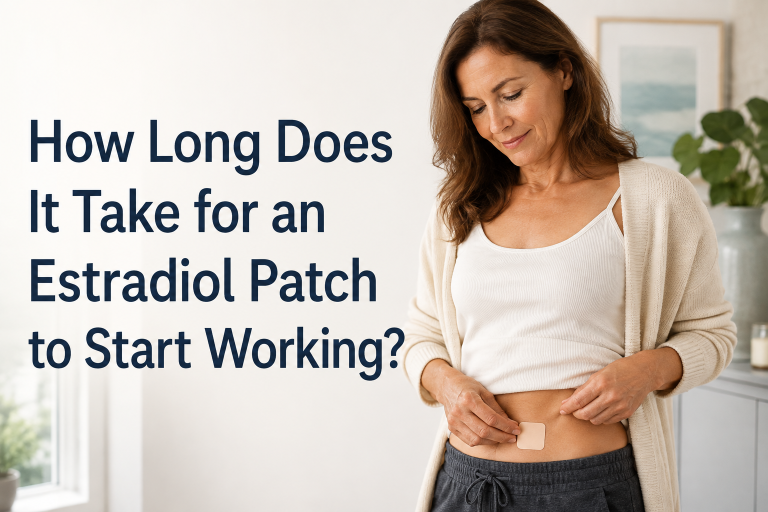
- Patches: Changed once or twice a week and give a steady dose. Many patients like the benefits of an estrogen patch, and it helps to know how fast an estradiol patch works so you can set realistic expectations.
- Gels and creams: Rubbed onto the skin daily. Easy to adjust, though some people find them messy. Deciding between a patch or cream often comes down to lifestyle.
- Pills: Simple and affordable, but they carry a higher clot risk than skin-based forms.
- Pellets: Tiny implants placed under the skin every few months. Hormone pellets are convenient, but they’re compounded rather than FDA-approved, and the dose can’t be lowered once placed, so they need careful monitoring.
- Vaginal estrogen: Low-dose creams, rings, or tablets that treat dryness and painful sex with very little absorbed into the bloodstream.
In our experience, many women after hysterectomy start with a patch or gel because it’s steady, flexible, and easy to fine-tune.
Many also prefer bioidentical hormone therapy, which uses estradiol that’s chemically the same as the estrogen your ovaries made.
When Should You Start HRT After Surgery, and How Long Should You Take It?
If your ovaries were removed, many doctors start estrogen right after surgery or within the first few weeks, once you’re cleared to recover.
Women in early surgical menopause often stay on HRT until about age 51, then reassess.
After that, how long you continue depends on your symptoms, goals, and health.
The FDA’s updated labeling recommends starting systemic HRT within 10 years of menopause or before age 60, when the benefits are strongest.
For surgical menopause, your menopause “starts” the day of surgery, so you’re squarely in that window.
There’s no automatic stop date.
Many women wonder how long you can stay on HRT, and the honest answer is that it’s a yearly conversation with your provider.
Some women continue well into their 60s, and there can be real benefits of HRT after 65 for the right person.
Lab work helps guide your dose.
It’s smart to check your hormone levels before starting and again a few months in.
The timing of hormone testing matters too, especially if you still have your ovaries.
Questions to Ask Your Doctor Before and After Surgery
If your hysterectomy hasn’t happened yet, you have more control than you might think.
Bring these questions to your surgeon:
- Will my ovaries be removed, and why?
- Is it possible to keep one or both ovaries?
- If my ovaries are removed, when can I start estrogen?
- Does my history of endometriosis change my HRT plan?
- Who will manage my hormones after I recover?
After surgery, keep a simple log of hot flashes, sleep, mood, and energy.
It shows you and your provider whether treatment is working.
How Nulevel Wellness Medspa Supports Women After Hysterectomy
At Nulevel Wellness Medspa, we know that life after a hysterectomy can feel uncertain.
Our goal is to help you feel like yourself again, with a plan built around your body, your surgery, and your goals.
Our hormone replacement therapy for women starts with a detailed consultation and lab work.
We offer in-office blood draws, so testing is quick and convenient.
From there, we’ll talk through your options, including estrogen patches, gels, bioidentical hormones, and pellets, and explain the pros and cons of each.
Hormone needs change, especially in the first year after surgical menopause, so we follow up regularly to fine-tune your dose.
You can see us in person for HRT in Gilbert at our Pecos Road and San Tan Village offices, or in Show Low.
If you live elsewhere in Arizona, a telehealth consultation makes it easy to get started from home.
Final Thoughts
HRT after hysterectomy isn’t one-size-fits-all.
If your ovaries were removed before menopause, estrogen therapy can protect your long-term health and ease symptoms that often hit hard and fast.
If your ovaries were kept, watching for early signs of menopause helps you act at the right time.
Most women without a uterus need estrogen alone, and patches and gels carry a lower clot risk than pills.
If you’re in Gilbert, Show Low, or anywhere in Arizona and want clear answers about hormones after surgery, Nulevel Wellness Medspa is here to help.
We’ll test your levels, walk you through your options, and create a plan that helps you feel like you again.
Frequently Asked Questions
Do I need HRT if I still have my ovaries?
Usually not right away. If your ovaries were kept, they keep making estrogen after a hysterectomy. However, research shows menopause may come earlier than expected, so watch for hot flashes, night sweats, and sleep changes. If symptoms appear, a blood test and a talk with your provider can help you decide whether HRT makes sense.
How soon after a hysterectomy can I start HRT?
If your ovaries were removed, many doctors start estrogen right after surgery or within the first few weeks, once your surgeon clears you. Starting early can prevent the sudden, intense symptoms of surgical menopause. If your ovaries were kept, there’s no set start date; HRT begins when menopause symptoms appear.
Does a hysterectomy put you into menopause?
Only if both ovaries are removed. Removing the uterus stops your periods, but menopause is caused by the ovaries no longer making hormones. If your ovaries were kept, you won’t go into menopause immediately, though studies suggest it may happen a few years earlier than it otherwise would.
Is estrogen-only HRT safer than combined HRT?
For women without a uterus, estrogen-only HRT generally has a better safety profile. Long-term data from the Women’s Health Initiative showed that estrogen alone was linked to lower breast cancer rates, while combined estrogen and progestin was linked to higher rates. Your personal risk still depends on your age, health history, and the type of estrogen you use.
Can I use bioidentical hormones after a hysterectomy?
Yes. Bioidentical estradiol is chemically the same as the estrogen your ovaries made, and it’s available in FDA-approved patches, gels, and pills. Many women after a hysterectomy use bioidentical estradiol alone. Compounded versions and pellets are also options, but they need closer monitoring because doses can vary.
Will HRT cause weight gain after a hysterectomy?
HRT itself isn’t a major cause of weight gain. Many women gain weight around menopause because of falling estrogen, aging, and changes in sleep and activity. Some find that balanced hormones make it easier to sleep, exercise, and manage weight. If weight is a concern, your provider can build a plan that addresses both.