
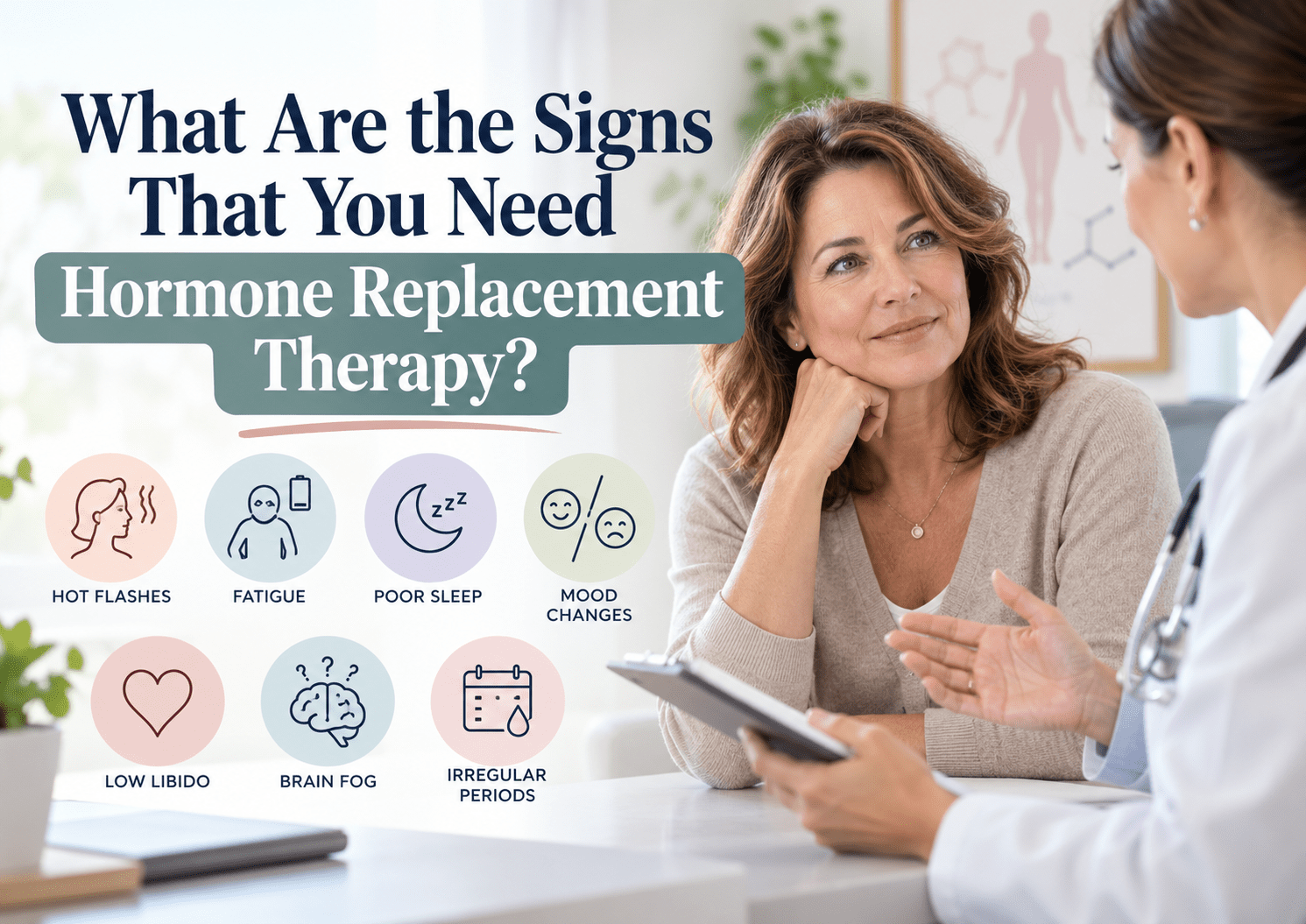
What Are the Signs That You Need Hormone Replacement Therapy?
The most common signs you may need hormone replacement therapy are hot flashes, night sweats, poor sleep, mood changes, brain fog, vaginal dryness, and low libido in women, plus fatigue, lost muscle, and erectile changes in men. Symptoms matter most when they disrupt your sleep, work, or relationships. A licensed provider uses your symptoms, health history, and sometimes lab work to decide whether HRT is safe and right for you.
You’re tired in a way sleep doesn’t fix. Your temper is shorter, your focus is fuzzy, and your body feels like it belongs to someone else. If you’ve been wondering what are the signs that you need hormone replacement therapy, you’re asking the right question, and you’re far from alone.
In a 2025 CDC survey of women ages 40 to 60, nearly half reported menopause symptoms in the past year. Yet only about 1 in 6 of those women were taking a prescription to treat them.
At Nulevel Wellness Medspa, we hear the same story often: patients waited years because they assumed feeling this way was just part of getting older. This guide walks you through the most common signs in both women and men, how to tell when symptoms are worth a visit, and what a safe evaluation looks like.
What Are the Signs That You Need Hormone Replacement Therapy?
The clearest signs you may need hormone replacement therapy are symptoms caused by falling estrogen, progesterone, or testosterone that affect your daily life. In women, that includes hot flashes, night sweats, sleep trouble, mood swings, and vaginal dryness. In men, it includes low sex drive, erectile changes, fatigue, and muscle loss.
Having one symptom on a rough week doesn’t mean you need treatment. What matters is a pattern: symptoms that keep coming back, get worse over months, or start crowding out the things you enjoy.
Many of these symptoms can also come from thyroid problems, stress, or poor sleep. That’s why a real exam matters more than any online checklist, including this one.
Signs of Hormone Changes in Women
Most women notice hormone changes during perimenopause, the years before periods stop for good. It often starts in your 40s, but it can begin earlier. These are the signs that most often lead women to ask about hormone replacement therapy for women.
Hot Flashes and Night Sweats
Hot flashes are sudden waves of heat, often with a flushed face and sweating. Night sweats are the same thing while you sleep. They’re the most common reason women seek HRT, and hormone therapy is the most effective treatment for hot flashes.
They also tend to last longer than people expect. A major study found that frequent hot flashes and night sweats lasted a median of 7.4 years, and even longer for women whose symptoms started early.
Poor Sleep That Good Habits Don’t Fix
You keep a dark room, skip late caffeine, and still wake at 3 a.m. Falling estrogen and progesterone can break up your sleep, even without night sweats. If better habits haven’t helped after a few weeks, hormones may be part of the picture.
Mood Swings, Anxiety, and Brain Fog
Feeling irritable, teary, or anxious for no clear reason is common during the transition. So is losing words mid-sentence or walking into a room and forgetting why. Many women find that HRT helps with brain fog, though results vary.
HRT isn’t a first-line treatment for clinical depression. If you feel hopeless or have lost interest in most things, tell your provider so they can look at every option.
Vaginal Dryness, Painful Sex, and Urinary Changes
Lower estrogen can thin the tissue in the vagina and bladder. That can cause dryness, itching, pain during sex, more urinary tract infections, or a sudden need to pee. Doctors call this genitourinary syndrome of menopause (GSM).
It’s very common, yet often untreated. A review of 27 studies found that a large share of postmenopausal women have these symptoms, and few use vaginal estrogen, which is one of the most effective options. Unlike hot flashes, these symptoms usually get worse over time without treatment.
Irregular Periods in Your 40s
Cycles that come closer together, further apart, heavier, or lighter are often the first clue that perimenopause has started. You don’t have to wait for your periods to stop to talk about HRT.
Joint Aches, Hair Thinning, and Bone Loss
Estrogen helps protect joints, hair, and bones. When it drops, some women notice new stiffness, achy joints, or thinner hair. You can read more about HRT and joint pain and whether HRT helps with hair loss if those are your main concerns.
Bone loss is silent, so you won’t feel it. It speeds up in the years around menopause, which is one reason HRT is also used to help prevent osteoporosis in the right patients.
Some women also gain weight around the belly. Hormones can play a role, and how fast you see results from losing weight on HRT depends on your diet and activity.
What Are the Signs of Low Testosterone in Men?
The most common signs of low testosterone in men are a lower sex drive, erectile changes, low energy, fatigue, and loss of muscle or bone strength. These symptoms, combined with two low morning blood tests, are what doctors use to diagnose testosterone deficiency and decide whether treatment makes sense.
Low testosterone is more common than many men realize. In one large study of men 45 and older visiting primary care offices, about 39% had low testosterone levels, and the odds were higher in men with obesity, diabetes, or high blood pressure. Treatment options include hormone replacement therapy for men.
Low Sex Drive and Erectile Changes
Less interest in sex, weaker erections, or fewer morning erections are classic signs. Erectile issues can also come from blood flow problems, so they deserve a full workup either way. Our sexual dysfunction treatment looks at both hormonal and non-hormonal causes.
Fatigue, Lost Muscle, and Weight Gain
Men with low testosterone often feel drained, lose strength at the gym, and gain fat around the middle. Some also notice low mood or thinning hair, and there’s a real link between low testosterone and hair loss.
If you’re hoping to have children, mention it right away. Standard testosterone replacement therapy can lower sperm count, which is why many men ask whether TRT affects fertility. Options like enclomiphene treatment work differently and may be a better fit for some men.
Why a Single Blood Test Isn’t Enough
Testosterone rises and falls during the day and is highest in the morning. The American Urological Association guideline uses a total testosterone below 300 ng/dL as a reasonable cutoff, confirmed by two early-morning tests on different days. In our experience, a test drawn too late in the day is a common reason results need to be repeated.
How Do You Know If Your Symptoms Are Bad Enough for HRT?
Your symptoms are worth a hormone evaluation when they keep coming back and make daily life harder. If they disrupt your sleep, focus at work, relationships, sex life, or exercise for more than a few weeks, it’s reasonable to see a provider. You don’t need to wait until you feel at your worst.
Ask yourself these questions. If you answer yes to two or more, it’s a good time to talk with someone:
- Do hot flashes or night sweats wake you up several nights a week?
- Are you tired most days even after a full night in bed?
- Has your mood changed enough that family or coworkers have noticed?
- Have you lost interest in sex, or does it hurt?
- Are you forgetting things or losing focus in ways that worry you?
- Have you lost strength or gained weight without changing your habits?
- Have your periods changed in your late 30s or 40s?
Many of our patients tell us they almost didn’t come in because their symptoms “weren’t that bad.” Then they realize how much energy they’d been spending just getting through the day.
When Should You Start Hormone Replacement Therapy?
For most healthy women, the best time to start hormone replacement therapy is when symptoms become bothersome, ideally before age 60 or within 10 years of menopause. Starting in this window gives the most favorable balance of benefits and risks. Women with early or premature menopause are usually advised to start sooner.
During Perimenopause
You don’t have to wait until your periods stop. The NHS advises that HRT can begin as soon as menopause symptoms start bothering you, even while you’re still having periods.
Early or Premature Menopause
If your periods stop before 40 (premature menopause) or before 45 (early menopause), hormone therapy is usually recommended until at least the average age of menopause, around 51. This helps protect your bones and heart, not just ease symptoms. The same applies if menopause was caused by surgery or cancer treatment.
The Under-60 or 10-Year Window
The Menopause Society’s 2022 hormone therapy position statement says that for healthy women under 60, or within 10 years of menopause, the benefits of HRT generally outweigh the risks for treating hot flashes and preventing bone loss. Starting later isn’t ruled out, but it needs a closer look at your personal risks. Many women still do well with HRT after 65 when it’s carefully chosen and monitored.
Safety guidance has also shifted. In November 2025, the FDA announced it would remove boxed warnings about heart disease, breast cancer, and dementia from most menopause hormone products. A warning about uterine cancer remains for estrogen-only products, which is why women with a uterus also take a progestogen.
Can a Blood Test Tell You If You Need HRT?
A blood test alone usually can’t tell a woman whether she needs HRT. During perimenopause, hormone levels swing from day to day, so one result may look normal even when symptoms are real. For women over 45, providers usually diagnose perimenopause from symptoms and cycle changes. For men, blood tests are a key part of the diagnosis.
Timing makes a big difference for accurate results. Our guides on the best time to test for hormone imbalance and how to check hormone levels cover what to expect.
Who Should Not Take Hormone Therapy
HRT is safe for many people, but not for everyone. Your provider will usually steer you toward other options, or take extra care, if you have any of the following:
- A history of breast cancer or another hormone-sensitive cancer
- A past blood clot in the legs or lungs
- A past stroke or heart attack
- Active liver disease
- Unexplained vaginal bleeding
- Pregnancy, or for men, prostate cancer or a high red blood cell count
Some of these aren’t absolute “no” answers. For example, a skin patch or gel may carry a lower clot risk than a pill, and low-dose vaginal estrogen is sometimes an option for women who can’t take full-body HRT.
Red Flags to Get Checked First
Some symptoms need a medical workup before anyone talks about hormones. Bleeding a year or more after your last period is the biggest one. About 90% of women with uterine cancer have this kind of bleeding, and ACOG’s 2026 guidance recommends an ultrasound and tissue sample for most cases.
Also get checked promptly for a new breast lump, unexplained weight loss, or chest pain. These aren’t signs you need HRT. They’re signs you need to be seen.
Bioidentical, FDA-Approved, and Other Options
“Bioidentical” means the hormone has the same chemical structure as the one your body makes. Several FDA-approved products, like many estradiol patches and micronized progesterone, are bioidentical. Compounded hormones are mixed by a pharmacy for one patient, and they can allow custom doses or forms.
Each choice has trade-offs. FDA-approved products go through set testing for dose and safety. Compounded products offer more flexibility, but the FDA doesn’t review them the same way. A good provider explains both and helps you choose.
Delivery matters too. Options include patches, gels, creams, pills, vaginal estrogen, and hormone pellet therapy. If you’re comparing forms, our breakdown of the estrogen patch vs cream is a helpful place to start. Non-hormonal medications and lifestyle changes can also help people who can’t or don’t want to use hormones.
How Nulevel Wellness Medspa Helps You Find Answers
At Nulevel Wellness Medspa, hormone care starts with listening. Every treatment plan begins with a consultation and clinical evaluation by a licensed provider who reviews your symptoms, health history, and lab work before recommending anything.
For women, we offer bioidentical hormone therapy and HRT tailored to perimenopause and menopause. For men, we offer testosterone replacement therapy and enclomiphene, with ongoing lab monitoring to keep levels in a healthy range. Prescriptions are filled through our licensed pharmacy partners and delivered to your door.
Can’t make it to an office? A telehealth consultation is available to anyone physically located in Arizona at the time of the visit. Results vary from person to person, and your provider will monitor how you respond and adjust along the way.
What to Bring to Your First Hormone Consultation
A little prep helps you get the most out of your first visit. Bring or jot down:
- A list of your symptoms, when they started, and how often they happen
- The date of your last period and any recent changes in your cycle
- Current medications, supplements, and birth control
- Personal or family history of breast cancer, blood clots, stroke, or heart disease
- Any recent lab results, mammogram, or bone density scan
- Your goals, such as better sleep, more energy, or protecting fertility
It’s also smart to ask how long you might stay on treatment. Many people wonder whether they can take HRT for the rest of their life, and the answer depends on your health and goals over time.
Take the Next Step Toward Feeling Like Yourself
Hot flashes, sleepless nights, brain fog, low libido, and fatigue aren’t things you simply have to push through. They’re signals worth listening to, and the right evaluation can show whether hormones are behind them.
Nulevel Wellness Medspa helps women and men across Arizona find out whether hormone replacement therapy is a safe, good fit, with careful testing, clear answers, and ongoing support. Visit us in Gilbert or Show Low, or start with a telehealth visit from anywhere in the state.
Frequently Asked Questions
Can you start HRT before your periods stop?
Yes. You don’t need to wait for your periods to stop to start hormone replacement therapy. Many women begin HRT during perimenopause, when symptoms like hot flashes, poor sleep, and mood changes first appear. Your provider will choose a type and schedule that fits a cycle that is still changing.
At what age should you start hormone replacement therapy?
There’s no single right age. Most women start HRT in their 40s or early 50s when symptoms become bothersome. Starting before 60, or within 10 years of menopause, offers the most favorable balance of benefits and risks for healthy women. Women with menopause before 45 are usually advised to start earlier.
Can hormone imbalance cause weight gain?
Yes, it can contribute. Falling estrogen in women and low testosterone in men can shift fat toward the belly and make muscle harder to keep. Hormones are rarely the only cause, though. Sleep, stress, diet, activity, and other medical conditions all play a role, so a full evaluation looks at the whole picture.
Is HRT safe after the FDA warning changes?
For many healthy people under 60 or within 10 years of menopause, the benefits of HRT generally outweigh the risks. In November 2025, the FDA moved to remove most boxed warnings from menopause hormone products. HRT still isn’t right for everyone, so a provider should review your personal and family history first.
Do men need hormone replacement therapy?
Some men do. Men with symptoms like low sex drive, erectile changes, fatigue, and muscle loss, plus two low morning testosterone tests, may benefit from testosterone therapy or other options like enclomiphene. A provider should confirm the diagnosis and check for other causes before starting any treatment.
How long does it take for HRT to work?
Many women notice fewer hot flashes and better sleep within a few weeks, with fuller results in about three months. Vaginal symptoms may take a bit longer to improve. Men on testosterone therapy often notice changes in energy and libido within weeks, while muscle and body composition changes take several months.
Can I get HRT through telehealth in Arizona?
Yes. Nulevel Wellness Medspa offers telehealth consultations for patients who are physically located in Arizona at the time of each visit. You’ll meet with a licensed provider, complete any needed lab work, and receive a personalized plan. In-person visits are available at our Gilbert and Show Low offices.

